The India women’s team have arrived in England with a season-defining stretch ahead of them. As the reigning ODI World Cup champions, they will be hoping to see that translate into the shortest form of the game as well, with England hosting the T20 World Cup later this month. India’s showing in the previous T20 World Cup was a bit under par, but now with several seasons of WPL experience under their belt, Harmanpreet Kaur’s side will look to give a better account of themselves this year. They’re also in a tough group, with Australia, South Africa and arch rivals Pakistan for company, and only two sides will advance to the last four.
India also had the advantage of playing a T20 series against the hosts ahead of the World Cup. Fans tracking Women’s cricket news saw more than a routine bilateral series. They saw India respond after early wickets, England lose control after a promising start and then regain it, and both teams reveal clues about their respective strategies before the World Cup.
This series mattered because it sat at an awkward but useful point in the calendar. It was close enough to the global event to feel like preparation, yet competitive enough to expose weak areas. India needed clarity in combinations and England needed answers at home. Neither side treated the games as soft practice.
Why This Series Mattered
The tour was built around three T20Is followed later by a one-off Test at Lord’s. That structure gives the tour two different identities. The T20I leg is fast, immediate, and directly connected to short-format planning. The Test is slower, symbolic, and important for the wider status of women’s red-ball cricket.
For India, this tour is a chance to test whether their best T20 plans can travel. Conditions in England rarely give batters the same rhythm they enjoy on flatter Asian surfaces. The ball can grip, seam, or hold up just enough to disturb timing. That makes shot selection more important than raw hitting.
For England, the home advantage is real but not automatic. Familiar venues help, but pressure changes when a major tournament is around the corner. A home side is expected to control conditions and not merely understand them.
This short series should answer practical questions rather than create long debates. Selection debates become clearer when players are forced into match situations, especially against strong opponents.
Key areas to watch
Powerplay Control: India need strong starts without reckless risk, while England need early wickets without leaking momentum.
Middle-Overs Tempo: Strike rotation against spin and pace variation will decide whether innings stall or stretch.
Death-Overs Nerve: The last four overs with bat and ball should reveal which players are trusted under pressure.
Fielding Quality: In close T20 games, one saved boundary can carry the same value as a late cameo.
Role Clarity: Batters and bowlers must know their jobs before the match starts, not discover them halfway through.
The best teams do not enter global tournaments with vague plans. They use series like this to cut confusion.
Chelmsford Opener: What the Scorecard Told Us
The first T20I gave India the better start in the rivalry. The scorecard showed India making 188/7 after early trouble, then restricting England to 150/8. Jemimah Rodrigues scored 69 from 40 balls, Yastika Bhatia added 54, and Nandni Sharma took 3/34 on debut. Amy Jones fought for England with 67, but the chase lost shape in the second half.
That result said plenty about India’s batting character. Losing early wickets can make a T20 side freeze, but India counterattacked. Bhatia changed the rhythm in the powerplay, while Rodrigues controlled the innings with smart placement and strong tempo. Their partnership gave India a platform that felt larger than the raw runs.
England’s chase had a different pattern. Jones kept them alive, but the support around her was thin. Once India dragged the asking rate up, England’s middle order looked stretched. The collapse was not just about wickets. It was about pressure building until the shots became harder and the gaps became smaller.
India’s Batting Balance and England’s Response
India’s best sign was not only the total. It was the way the runs came after a poor start. That is a stronger indicator than a smooth innings on a perfect day. Teams that recover well usually travel further in tournaments because they are not dependent on ideal scripts.
Rodrigues looked especially important because her method suits English conditions. She does not need every ball to disappear. She can work gaps, disturb bowlers’ lengths, and still accelerate when the field spreads. That kind of player becomes valuable when pitches are not completely flat.
Yastika’s innings mattered for a different reason. She brought left-handed aggression and changed the mood before England could settle. India need that kind of interruption. A bowling side becomes comfortable when wickets bring quiet overs. Bhatia prevented that comfort.
England will look at the same game with mixed feelings. Lauren Bell’s early burst gave them a perfect opening. Tilly Corteen-Coleman’s calm debut offered a positive sign. Jones showed her class with the bat. Yet the dropped chances, loose patches, and middle-order slowdown made the final margin look fair.
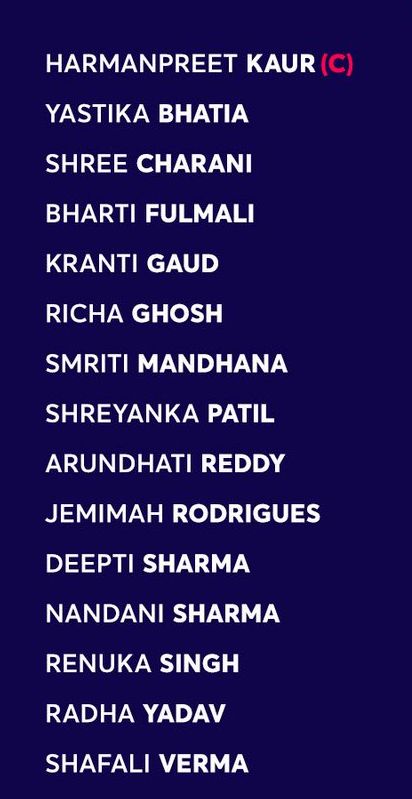
India’s senior group gives them structure. Harmanpreet Kaur brings leadership and middle-order authority. Smriti Mandhana offers top-order class. Deepti Sharma gives control with bat and ball. Renuka Singh can be dangerous if there is movement early. Richa Ghosh brings finishing power, while Shafali Verma can change a powerplay in ten balls.
England’s core remains strong even after an uneven series. Nat Sciver-Brunt’s availability and role are always central when she plays. Sophie Ecclestone gives elite spin quality. Amy Jones has already shown form. Lauren Bell can hurt teams if she finds swing and bounce. Heather Knight’s experience still matters in pressure games.
Players to follow closely
Jemimah Rodrigues: Her gap-finding and tempo control look ideal for English T20 conditions.
Yastika Bhatia: Her left-handed power can disturb new-ball plans.
Nandni Sharma: A strong debut has given India another bowling option before the World Cup.
Amy Jones: England need her form to become a platform, not a solo rescue job.
Lauren Bell: Early wickets can still tilt the series if England support her better in the field.
India’s right-left batting combinations can trouble opponents if they keep forcing field changes. That matters because English venues often reward bowlers who settle into repeatable lengths. Constant angle changes make that harder.
England’s best route back is through powerplay discipline. If Bell and the other seamers remove India’s top order cheaply again, the hosts must then hold the squeeze. In Chelmsford, they opened the door but could not shut it.
Spin will be another major layer. Deepti and India’s slower bowlers know how to reduce pace from the game. England’s batters must decide whether to sweep, use the crease, or target straight boundaries. Passive play against spin will only increase pressure.
India also need to stay alert against England’s counterpunch. Jones showed that one batter can keep a chase alive longer than expected. If England add one more strong partnership around her, the next match can look very different.
World Cup Context and the Lord’s Test
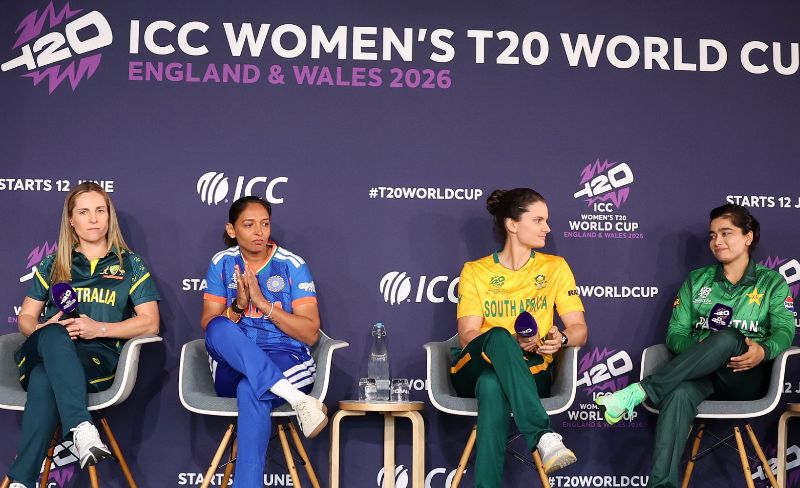
The ICC Women’s T20 World Cup 2026 makes this series sharper. England are hosts, India are serious contenders, and both sides know that rhythm matters before a tournament. Winning a bilateral series does not guarantee a World Cup run, but it can remove uncertainty from selection and strategy.
India’s group route includes Pakistan, Netherlands, South Africa, Bangladesh, and Australia. That is a varied set of opponents. They will need more than one style of cricket. They must handle emotional pressure, lower-ranked teams with discipline, strong pace attacks, and Australia’s tournament edge.
England’s challenge is different. Hosting brings attention, expectation, and scrutiny. Every dropped catch, selection call, and batting collapse will feel louder. A home World Cup can lift a team, but only if the team keeps the noise outside the dressing room.
The Test at Lord’s after the World Cup adds historic weight. It will be the first women’s Test staged at the venue, which makes it more than a post-tournament fixture. It asks players to switch from T20 urgency to red-ball patience almost immediately. That is a genuine test of cricket range.
India’s fielding also deserves attention. Strong fielding can make their bowling plans look sharper. T20 cricket is too short for careless errors. A misfield in the deep, a missed run-out, or a dropped catch can undo three good overs.
England, meanwhile, must fix their middle-overs batting response. They cannot depend on one player carrying the chase. Their experienced players need to absorb pressure without letting the required rate jump too far. They also need cleaner catching, because India’s batting depth becomes much harder to control once set players get second chances.