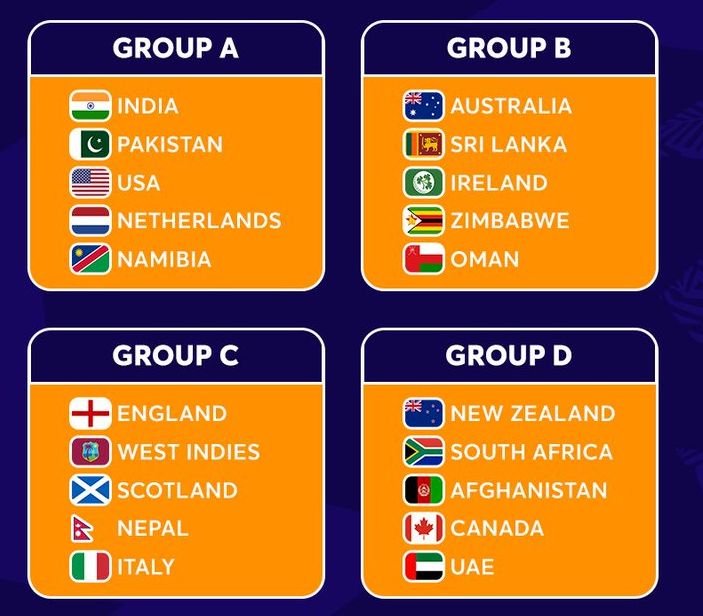
The three-match T20 International between South Africa and West Indies arrived at a decisive stage for both sides because the upcoming T20 World Cup timeline left limited room for correction and demanded fine tuning ahead of the mega event in India & Sri Lanka.
South Africa entered this series at home with a pace attack led by Kagiso Rabada and Anrich Nortje, supported by a top order featuring Aiden Markram, the returning Quinton de Kock and young upcoming star Dewald Brevis, who scored a stunning hundred in the recently concluded SA20 final.
West Indies arrived with a batting core built around hitters like Nicholas Pooran, Rovman Powell and Shimron Hetmyer, a structure that produces high six counts and sharp scoring swings within short phases of play.
The opening game was an important start for bettors tracking indicators across betting markets on sportsbook sites like BETVIBE, which offers odds on international and domestic cricket competitions on lines like top batter, total sixes and team run lines, where T20 volatility often creates sharp price movement within the first innings.
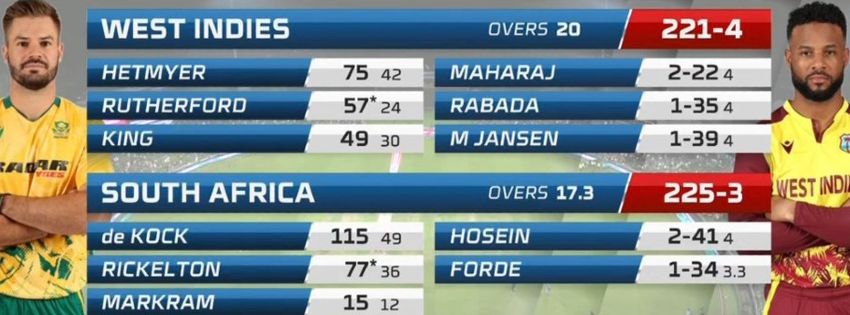
Head coach Shukri Conrad led South Africa to a decisive 2-0 victory; his team chased down 222 with 15 balls remaining in the second game at SuperSport Park, after having comfortably won the series opener at Boland Paark in the Cape.
A Short Series Between South Africa and West Indies
The T20I series was scheduled as a three-match contest played entirely in South Africa, compressed into a five-day window from January 27 to January 31. The series was originally intended as a five-match event but was reduced to three matches due to scheduling pressures ahead of the World Cup. It left little room for West Indies to recover after falling behind in the first match.
After the first T20I in Paarl, the series moved to other venues. That left both sides with little time to adapt. For South Africa, the familiarity of local pitches may have provided a small but meaningful edge. For the West Indies, it tested their ability to adjust plans on the fly.
Because the series was short, selection decisions for the opener took on extra weight. West Indies’ loss in the first game placed instant pressure on combinations and leadership calls. That’s why preparation for the T20 World Cup explains the increased attention from betting and analysis platforms, including BETVIBE Cricket Sportsbook. The BETVIBE cricket markets include intricate prop bets with dynamic odds for real-time betting as well as pre-match odds for “Winner”. Bettors rely on the diversity of markets to capitalise on the fact South Africa is widely considered joint-third favorites for the World Cup alongside England, behind India and Australia.
South Africa Players to Watch out at the WC
Aiden Markram: Markram bats in the top order as a right-handed batter and contributes occasional off-spin, with run scoring based on placement, strike rotation and control against spin-heavy attacks. He is also the captain of the squad, and had a good SA20 after some lean returns in international T20’s coming into the event.
Quinton de Kock: Quinton de Kock opens the batting as a left-handed wicketkeeper-batter. He had retired after the 2024 World Cup, but made a u-turn a few months ago, and has been good enough to force his way into their World Cup squad.
Tristan Stubbs: Tristan Stubbs bats in the middle order as a right-handed batter and offers part-time off-spin. Wasn’t in the original squad, but was added as a late replacement. Has a good record in India with IPL side Delhi Daredevils, which might influence the Proteas thinktank into getting him into the XI, especially if David Miller fails to recover from the knock he picked up in the SA20 with Paarl.
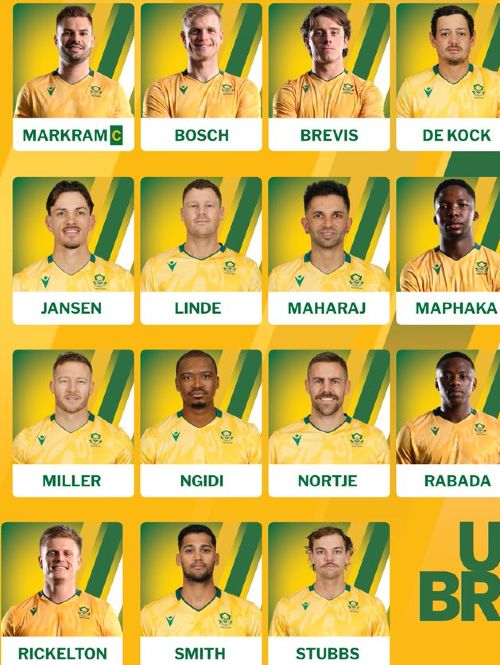
Kagiso Rabada: Rabada operates as a right-arm fast bowler across powerplay and death overs, using pace, hard length and seam movement to generate wickets.
Lungi Ngidi: Ngidi bowls right-arm fast-medium with emphasis on cutters and back-of-length control, often used through middle overs to manage run rate. Is under an injury cloud though, and it remains to be seen whether he recovers in time for the World Cup.
Keshav Maharaj: Maharaj bowls left-arm orthodox spin and provides control against right-handed batters, usually operating outside the powerplay to limit scoring. Maharaj focuses on economy rather than wicket volume, but it remains to be seen whether South Africa prefer the superior batting skills of fellow spinner George Linde, or have both spinners in the XI.
WI players to watch out for
Brandon King: King opens the batting as a right-handed batter and scores through timing and gap placement rather than sustained six-hitting. King drives innings stability between overs 1 and 6 by rotating strike, limiting early risk and preserving wickets.
Quentin Sampson: Sampson earned a surprise call-up to West Indies’ 15-member squad for the World Cup. He made his T20I debut in the series against Afghanistan. The Guyana Amazon Warriors player managed just 35 runs in three innings for his country, but enjoyed a strong 2025 Caribbean Premier League (CPL) season.
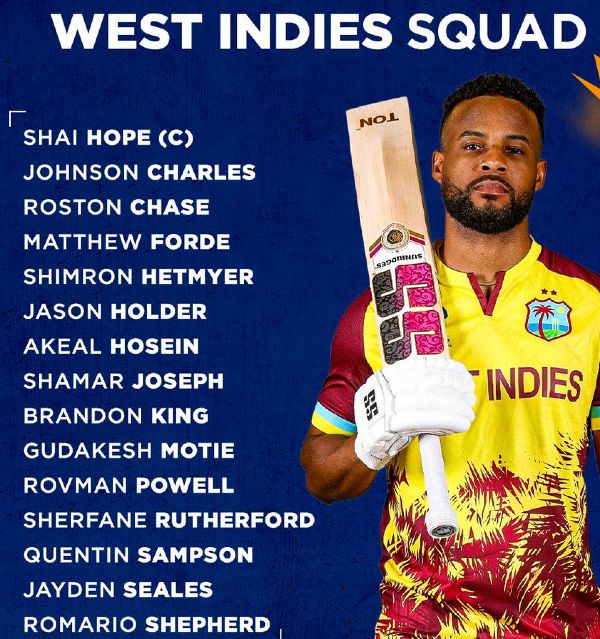
Akeal Hosein: Hosein bowls left-arm orthodox spin and bats left-handed, operating in the powerplay and middle overs to control run rate. Hosein drives scoring suppression between overs 1 and 14 by limiting boundary access and maintaining a flat trajectory.
Historic head-to-head meetings between South Africa and West Indies in T20 Internationals show a recurring pattern where the Proteas perform more consistently at home, while West Indies produces higher-variance results driven by batting surges.
The 2013 T20 International in Johannesburg highlighted South Africa’s advantage in home conditions, where disciplined pace bowling and controlled powerplay overs limited West Indies’ ability to launch early. South Africa’s victory was driven by a lower wicket loss in the first six overs and tighter death-over execution.
The 2023 T20 International in Centurion offered a more balanced contest, with both sides trading momentum through phases rather than dominating throughout. South Africa’s bowling control and West Indies’ power-hitting created a South Africa win, with the margin shaped largely by execution during overs 16 to 20.
The 2016 ICC T20 World Cup group-stage match in Nagpur showed the opposite dynamic, where West Indies capitalised on batting depth and boundary density to overpower South Africa in a high-pressure tournament setting.
South Africa’s 2-0 win showed their established roles, controlled attacking, and bowling discipline. Markram’s return to form was a particularly bright note. His unbeaten 86 in the first match was his highest T20I score. Ryan Rickelton’s adaptation to a No. 3 role is also worth watching. The team overall looked ruthlessly efficient, with little need for high-risk power.
West Indies lacked partnerships that reached 40 and lost batters too often. King’s bright start, with 23 off 14 balls, was one of their main positives to take away from the series. They will still hope for a good World Cup, led by Shai Hope on his return after missing out on the series against Afghanistan.
The Proteas are in better shape than the Windies, but have a tougher group to contend with- they also have New Zealand and Afghanistan in theirs, while the West Indies have a relatively easier group in comparison, made even more easy by the late withdrawal of Bangladesh.